NY Times: March for Our Lives: Maps of the More Than 800 Protests Around the World
Ella Charon • March 26, 2018
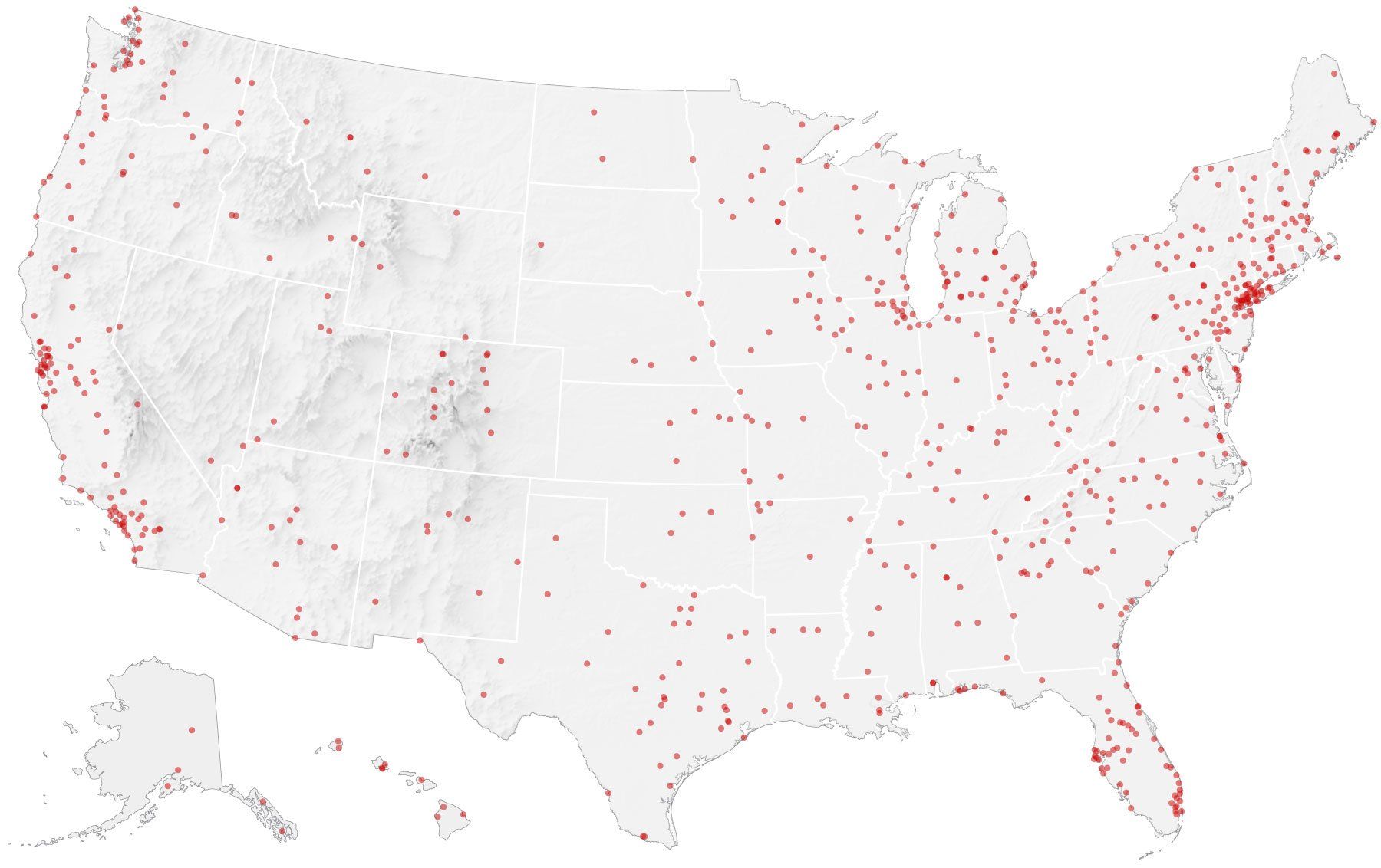
To view the recap and map of the 800+ March for Our Lives-inspired protests that took place around the world on Saturday, March 24th, click here.

Rock Your World intern, Jasper Eliot, is studying theater and integrated studies at UCLA.
We are so grateful to work with him!

This summer, the uprising of Black Lives Matter protests prompted creative responses from some of Rock Your World's very own team members.
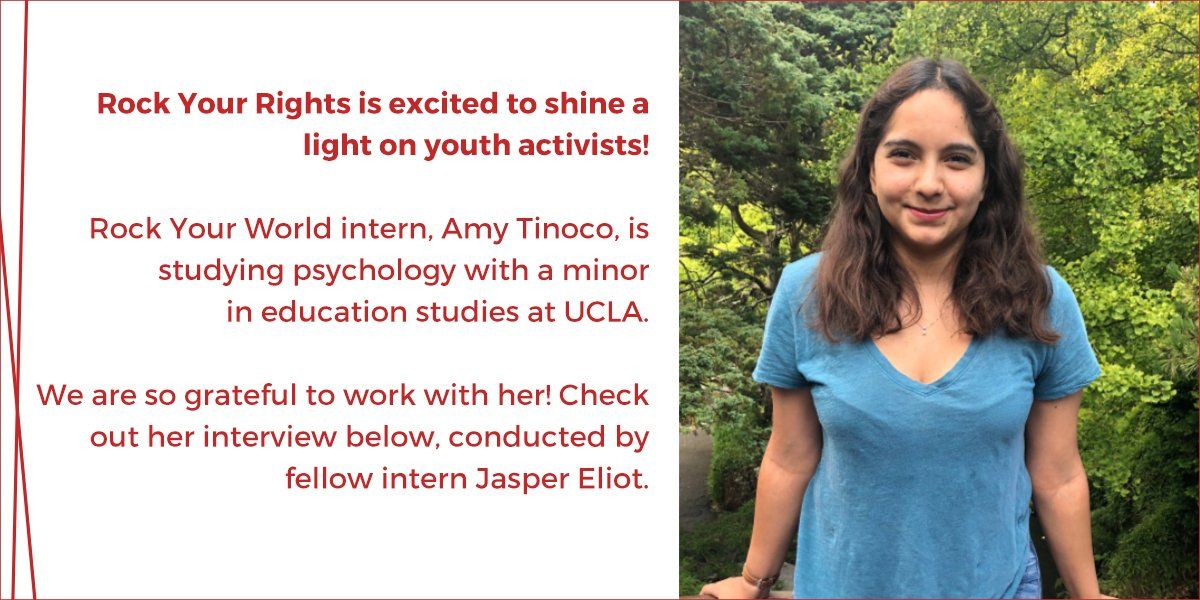
What school are you at and what’s your major? Why did you choose that school? “I’m attending UCLA and I’m majoring in psychology with a minor in education studies. I went to UCLA because it has such a great psychology department and also in the PHD sector.” What is your dream career? “I want to work in the nonprofit sector. I’m hoping to combine education and psychology and development so tying in all those aspects and working with children would be my dream career.” If you could talk to any animal what would it be and why? “Lets see, that’s a good question. So I'm obsessed with hedgehogs. I really want one so bad but you can’t buy them or have them as a pet in California. But I would like to speak to a hedgehog because I just want to know what they're thinking and they’re spiky so I just want to ask “Is it ok if I hold you, can I pet you?” And they seem sweet but you never know, so I think speaking to a Hedgehog would be pretty cool.” How did you find out about Creative Visions and what is your role at the foundation? “I found out about Creative Visions Foundation through a platform that UCLA partners with called Handshake. I found the internship opening on that site so I applied and my official title is Social Media and Programming Intern.” How did you become interested in social activism and do you have any advice for a young person who wants to get involved? “For the past few years of college I’ve gotten to know lots of students for varying backgrounds and of course they have different opinions, viewpoints and concerns, so in a way I didn’t want to be a bystander you know, I wanted to take a stance on things that mean a lot to me and to the friends I’ve made. So I became more interested in social activism by reading more articles and looking at more social media content relating to activism. I think my advice for a young person who wants to get involved would be not to be afraid to speak up and voice out your concerns. We have social media for a reason, we can use it for good. So my advice would be, start using your social media, start talking to your friends and family about these issues that should be talked about.” Do you have any hobbies outside of your work at Creative Visions and UCLA? “Some of my passions or hobbies would be those coloring books for adults, the very mature, detailed ones; I like coloring those. I also like reading fiction and playing video games.” What’s the best piece of advice you’ve ever received? “The best piece of advice I’ve ever received is to “not sweat out the small stuff.” I’ve always had the difficulty of stressing over small things so after hearing that advice I try to focus on the bigger picture and not stress over things I can’t control.”
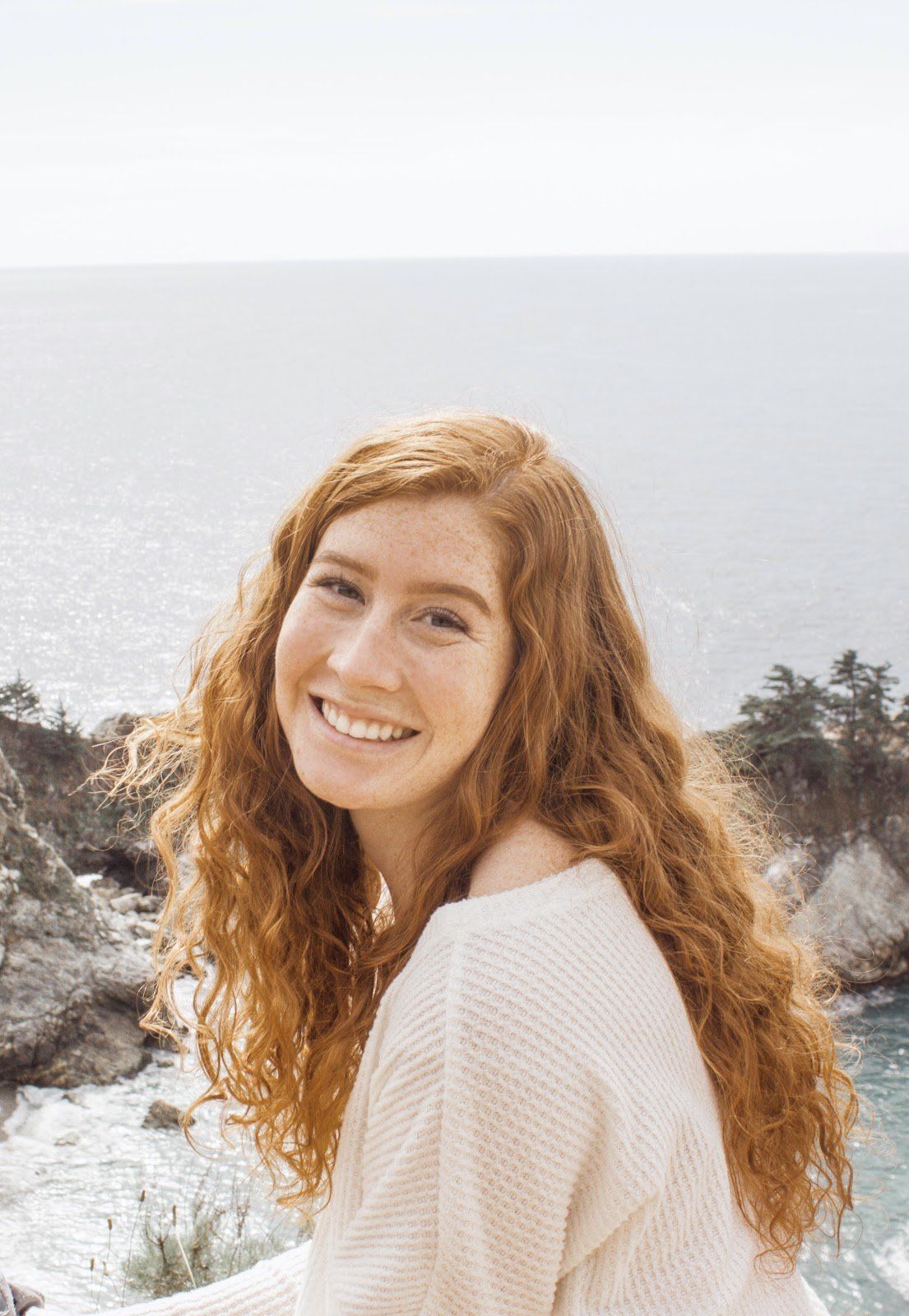
What are you majoring in? Why did you choose this major? “I’m studying history with a minor in multimedia design. I originally started with a history major because I was interested in learning about different people and cultures and how they have shaped the world we know today. Through the addition of a multi-media design minor I hope to be able to use digital media to tell those stories I learn about through history.” What are some of your favorite hobbies inside and outside of school? “I love reading. I think whatever genre of book you like to read there’s always an important message or just an escape from reality that a book can provide. I’m also training for a triathlon right now which is keeping my body and my mind healthy!” If you could have one superpower what would it be and why? “First of all, I love this question. I think if I could be a superhero I’d be Violet from The Incredibles. She has powers of invisibility and forcefield and whenever watching that movie while growing up I loved her character so much and I thought she was super sassy and a cool figure to look up to as a young girl.” When did you realize your passions for social activism? Do you have a specific area that you are most passionate about? “Coming into college is a time where you’re exposed to more than you have been previously, at least in my case, and through some of the different classes I took and the different people that I came into contact with I realized that I wasn’t satisfied with my contribution to making change and that I really want to not be a bystander in my lifetime. I want to be a changemaker and help people in the best way that I can and I think one thing that I am trying to focus my energy towards is through sustainability and helping the planet because those are changes that I can make quite easily to my lifestyle. I know it’s not helping other people directly but I know it is manageable that I think everyone can partake in not using plastic water bottles, maybe changing some foods that you eat. It’s something that I can do personally.” Who is the most influential woman in your life and why? “I’m gonna go with my mom because she has always been unconditionally loving but she is also been able to call me out in different areas as needed when growing up. I love that she is able to call me out because it is a way of her saying you’re better than this, you can do better, treat other people better and I think that goes to show that the greatest way to show love is to be super candid with those that you love. I think that’s been a great way that has helped shape how I see myself and the potential I have to treat others with the same kindness.” What are your favorite ways to show creativity? “I really love editing videos and photos, more specifically videos. I’ve been very very fortunate to have traveled this last year abroad, I lived in Switzerland and as I traveled I thought it was really important to document it in a way that I’d be able to share with others and remind me of how grateful I am for this experience and how privileged I am to have been able to travel and learn from that. Videos and photos are definitely my side-passion for creativity.” What is your role at the Creative Visions Foundation? How do you feel your work has been impactful during the digital time of COVID-19? “I am a Social Media Intern for Rock Your Rights and Rock Your World. During COVID-19, because people are less connected in real life they are paying more attention to social media which allows us to influence people and reach a greater audience because it’s less word of mouth. With more people checking on their platforms to stay connected it’s been helpful to get people’s attention easier because of how accessible everything is on social media.”

For this week’s spotlight, Creative Visions taps into the life of Leila! Rock Your World intern Leila Baadarani is a rising junior at Barnard College in Manhattan, NY, studying Anthropology and Human Rights.

COVID-19 and Domestic Violence: The Tale of Two Pandemics We are at the beginning of a new approach to human rights. COVID-19 has peeled back and laid bare the deep fault lines of inequality governments have enabled for years. It is apparent that all nine treaty bodies — the Convention on the Rights of the Child, Convention on the Elimination of All Forms of Discrimination Against Women, and the International Convention on the Elimination of All Forms of Racial Discrimination amongst the few of them — are not separate, but linked together. Suddenly, it’s easy to see that the rights of women and, say, the rights of migrants are connected. For example, domestic violence rates right now are skyrocketing due to the stay-at-home order, locking women and girls in with their abusers. Domestic violence is already an epidemic, but the violence is worsening because the services available for gender-based violence have been diverted to the health response, de-prioritizing domestic violence. Governments aren’t investing in safe and secure spaces like shelters as an essential part of their COVID-19 response. There’s a cost associated with absenteeism and missed work hours because of domestic violence, stunting women’s economic growth and the potential to leave their abusive relationship. COVID-19 deepened the epidemic of domestic violence to horrifying levels, but there is a possibility to transform the paradigm of human rights law to be one that’s intersectional. What is intersectionality? International women’s rights expert, Rangita de Silva de Alwis, pointed out, “Language has no innocence. We lack authority to articulate and give name to issues. There was a time when sexual harassment had no vernacular, until Anita Hill. There was once no language in law for domestic violence.” Luckily, the definition of intersectional, coined by Kimberly Crenshawe, is brief: race, class, gender, and other individual characteristics intersect with one another and overlap (like a circle road!) In a non-intersectional approach, domestic violence hotlines in the United States would only speak English, severely limiting access to shelters from immigrant or indigeneous women. It would only be helping one type of woman: English-speaking ones. COVID-19 tackles the right to health. That includes the virus of domestic violence. Although the CEDAW (Convention on the Elimination of Discrimination Against Women) doesn’t explicitly talk about domestic violence, its reason for existence is to stop discrimination against women in any form. UN Special Rappoteur Rashida Manjoo says, “States must acknowledge that violence against women is not the root problem, but that violence occurs because other forms of discrimination are allowed to flourish.” Domestic violence exists because some governmental systems don’t have adequate laws in place protecting women. Intersectionality, especially in light of this pandemic, says that we’re not all on the “same boat.” Instead, we’re weathering the same storm — and some people need a little extra help to get through it.
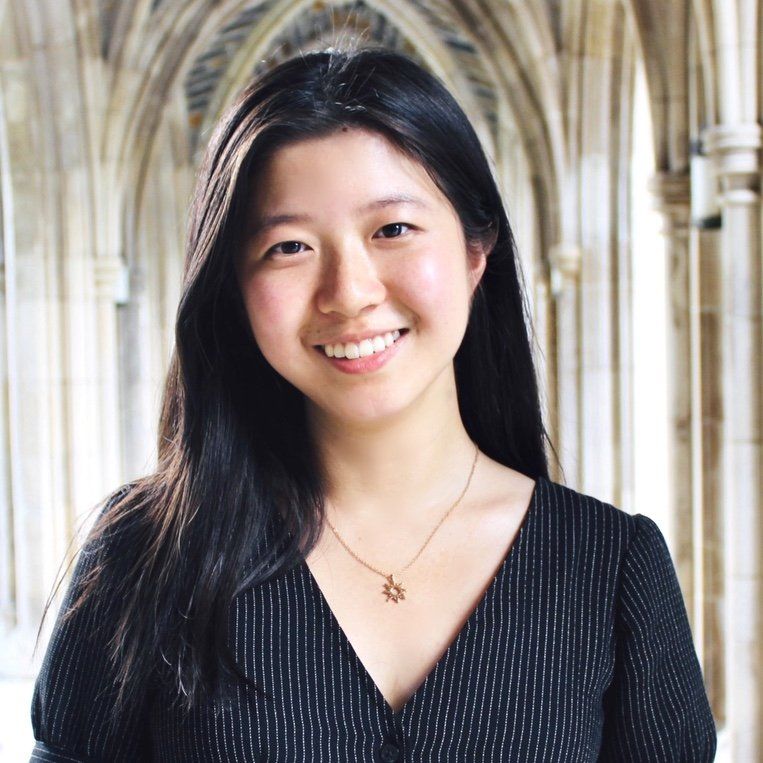
What are you most passionate about? That’s really hard to narrow down… I’m really, really passionate about poetry. I started writing poetry during my freshman year of high school, but it’s something that I kept with me throughout the years. For example, this past semester I took a poetry seminar at Duke and it was amazing! By the end of the semester, we had to submit an anthology - so mine was 15 pages long, and it was so cool to create that and get to compile together all the poems that I’ve written throughout the years. Besides that, I’m also interested in philosophy. Recently, I’ve started picking up on reading different philosophical works. I really like reading Laozi. There’s this book called A World of Ideas, which compiles all of these esteemed thinkers, and I’ve really enjoyed reading that. Since my school year has ended, I’m still trying to keep those brain juices flowing. How have you engaged in creative activism? I have written a couple poetry pieces that basically had an activist undertone to them. For example, I wrote a poem about the power of diversity for a local contest about two years ago. Why did you decide to join Creative Visions/Rock Your Rights/Rock Your World and how has your experience with this internship been so far? A little backstory: I was originally enrolled in Duke Engage, which is a fully funded service project that Duke puts on each summer, which is funded by alum Melinda Gates. I was planning on going to Guatemala to do consulting and entrepreneurship with local communities, but was cancelled due to Covid-19. Instead, I was given the option to pick my own virtual independent project instead - you write a proposal, have to get approval, and then afterwards, you have full creative freedom to do what you want. So I thought, why not do something involved in marketing but is also creative? I’m really interested in business, as you can probably tell from my extracurriculars. So I wanted something that would have a business focus. So I feel like a lot of the work I’m doing now is business related - we focus on copyrighting, marketing, social media, etc. At the same time, I also really like graphic design. I really like making these graphics because I get to refine my skills with Adobe Illustrator. Why do you think the work that you’ve done in this internship has been important? I think creative activism is always important. It’s one thing to create art for yourself - that’s all fine and dandy - but it’s another thing to create it for a larger audience. Art is especially powerful when it has a specific purpose. If art has an activist spark or edge to it, that makes it ten times more appealing and genuinely powerful to the masses. A lot of what we do, curriculum wise, is focused on rights - like the UDHR - I think is super important, especially now. It’s important for every person to have a general idea of what these rights are. I remember when I was in middle school, I had no idea. Just a general education on different subjects is really important in maintaining educational literacy in our generation. Stages of Sinking by Tina Xia The relationship experts online say this ‘no-contact’ rule works. And I say Okay because we’re apart now and nothing will be easier. So I etch out the scribbles of past fights and forget how I would wince each time I saw your name appear on my phone, remembering the hearts you put beside mine. No one remembers the fireflies when it’s bright out. Only in darkness do we look for light. There is so much I want to tell you. How I memorized the fifty states yesterday, how I started liking cherry tomatoes, how Ohio keeps popping up in every news article I read. How I am now living like water, each day seeping into the next. You can feel it but it’s barely there. They say this is part of the process, that I can still love red. But my gut is a faded canvas now, dripping paint with each crossed-out lover. A broken song plays in my bathroom. I hum the melody until the sink overflows.
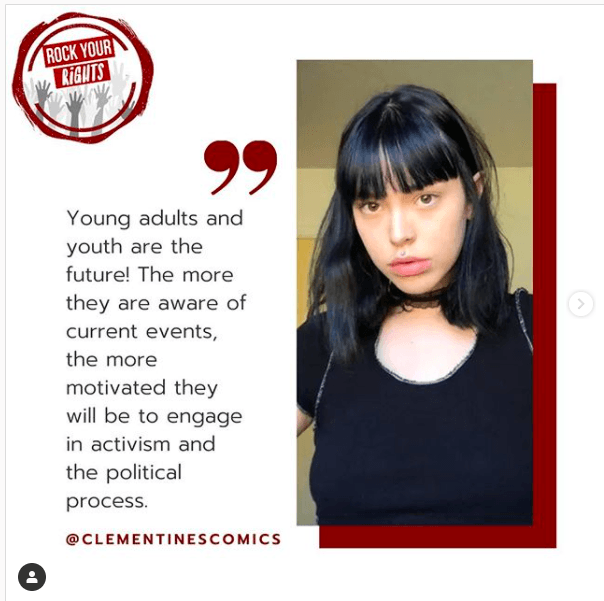
Clementine created stickers to raise awareness of and give to the Black Lives Matter Movement

Rock Your World intern, Stella Nguyen, is a sophomore at UCLA and is studying international development with two minors in theater and film.
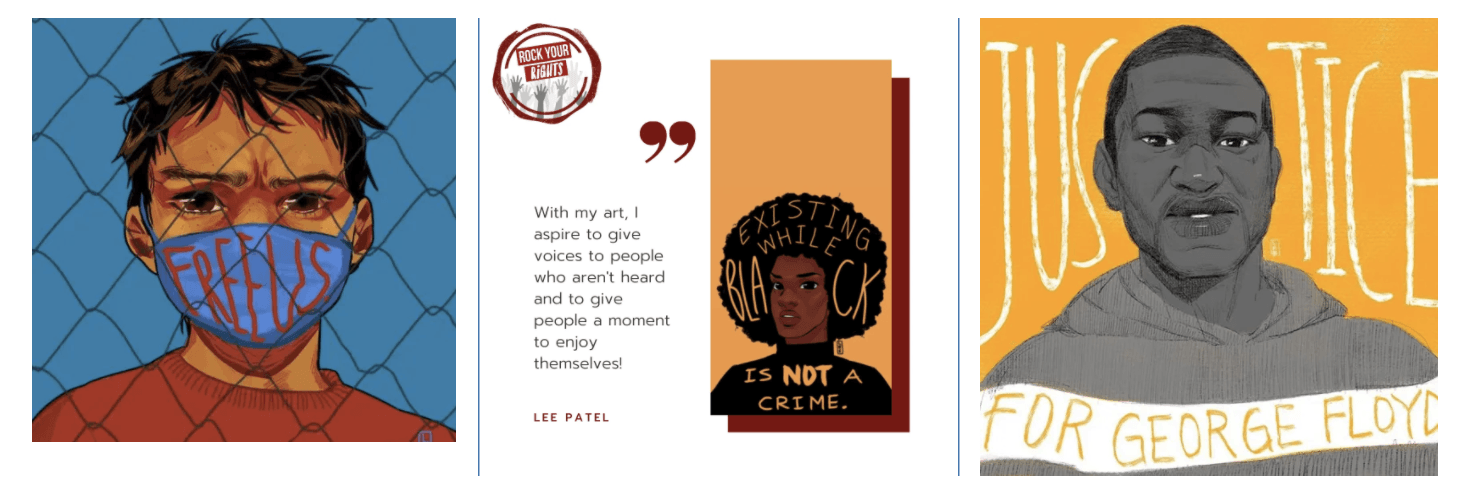
Lee Patel is a talented artist who uses his creativity as a form of activism. Check him out on Instagram!